
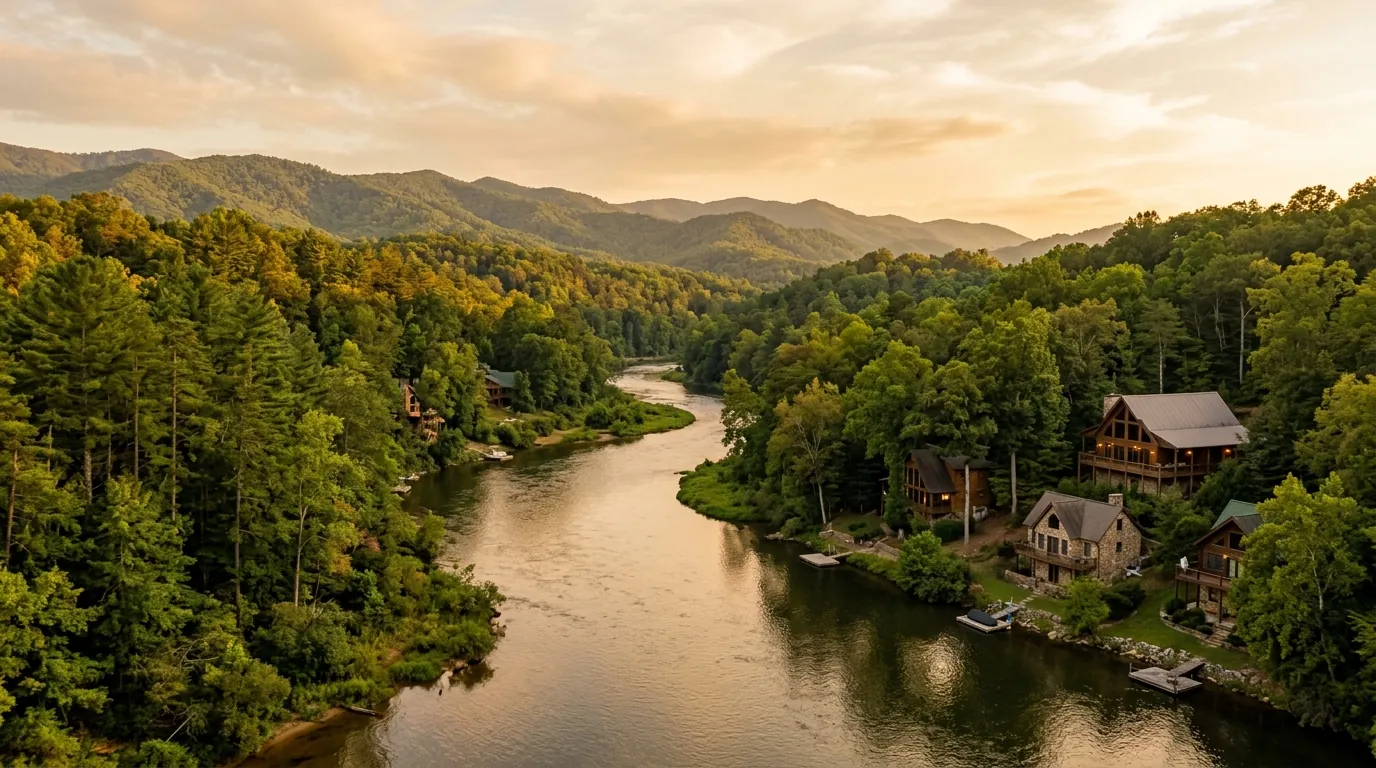
Tag: river homes

  • Homes for Sale Near the Chestatee River

    Homes for Sale Near the Chestatee River

    Quick answer (TL;DR)

    Homes near the Chestatee River in Dahlonega, Georgia range from interior lots with HOA-managed river access to full-frontage waterfront parcels. Prices vary widely depending on deeded frontage, acreage, and condition. Verify current inventory with a live MLS search. Most properties sit in Lumpkin County; some extend into Hall or Dawson County. Gold Peach Realty connects buyers with available listings along the river corridor.

    Homes for sale near the Chestatee River sit primarily in Lumpkin County outside Dahlonega, Georgia. Inventory ranges from HOA river-access lots to full-deeded waterfront parcels. Buyers should confirm flood zone status and verify well and septic requirements before submitting an offer.

    What Kinds of Homes Can You Find Near the Chestatee River?

    The Chestatee River winds through the North Georgia mountains before feeding into Lake Lanier, part of the Chattahoochee River watershed. The corridor closest to Dahlonega, within Lumpkin County, holds the greatest concentration of residential properties that carry river-proximity value.

    Full-Frontage Waterfront Homes

    These properties sit directly on the riverbank with deeded access to the water. They are the rarest and most sought-after type along the Chestatee. Expect a meaningful price premium over comparable inland homes; confirm current asking prices with an active MLS search before budgeting.

    Community River-Access Properties

    Several subdivisions near Dahlonega give residents shared access to the Chestatee through a community dock, trail, or put-in. This offers buyers a lower-cost path to river proximity without requiring direct frontage. Read the HOA documents carefully: access hours, permitted watercraft, and seasonal restrictions vary by community.

    Near-River Lots and Rural Parcels

    Properties within a half-mile to two miles of the river often sit on larger acreage with mountain and wooded views but no direct water frontage. They attract buyers who want space and privacy, plus easy river access for fishing or recreation, at prices below full-frontage listings. For a detailed breakdown of what separates each category, see the guide to Chestatee River waterfront homes.

    Where to Look: Key Areas Near the Chestatee River

    The Chestatee River corridor does not follow a single neighborhood boundary. Properties are distributed across several distinct areas that buyers should understand before searching.

    North of Dahlonega (Upper Chestatee)

    This section runs through less-developed terrain above the town. Properties here tend to be larger, often 3 to 10-plus acres, with private well and septic. The landscape is quieter and more rural. Buyers who want space and seclusion over HOA amenities tend to land here.

    South Toward Lake Lanier (Lower Chestatee / Hall County)

    As the river moves toward Gainesville, properties shift toward lake-adjacent character rather than pure river frontage. Dock permitting in this section involves the Army Corps of Engineers. Buyers planning any water structure should factor that in.

    Achasta on the Chestatee

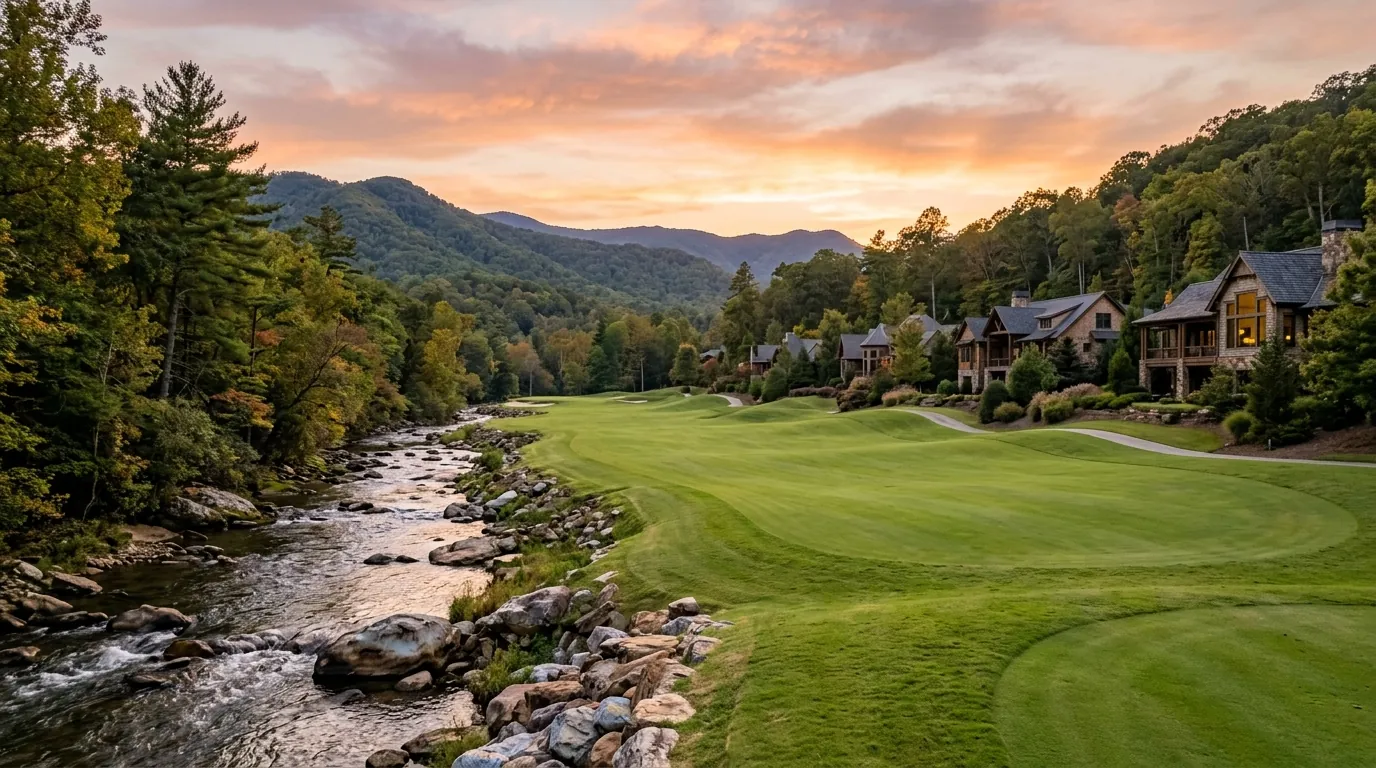
    Achasta is a gated golf community in Dahlonega where the Chestatee River runs alongside the Jack Nicklaus Signature 18-hole course. Homes in Achasta carry river and fairway views. One rule buyers need to understand before touring: Short-term-rental rights in Achasta are governed by the HOA covenants, and the current covenant language has not been verified – do not assume a home can be short-term rented, and request the current covenants in writing from the HOA. The community is designed for primary residence and long-term ownership.

    For a full picture of where the river corridor market stands today, the Chestatee real estate overview covers pricing context, inventory trends, and the communities that make up this market area.

    What Buyers Need to Know Before Making an Offer

    Flood Zone Status

    Properties near the Chestatee may fall within FEMA-designated Special Flood Hazard Areas, particularly along lower bank sections. Flood zone status directly affects insurance costs and, in some cases, lender requirements. Buyers should pull the FEMA Flood Insurance Rate Map for any parcel before going under contract. The FEMA flood map service center allows parcel-level lookups at no cost.

    Well and Septic Systems

    Most properties outside Dahlonega city limits rely on private wells and septic systems rather than municipal utilities. A water quality test and a licensed septic inspection are standard due-diligence items. Lenders financing rural properties typically require both before closing.

    River Access Rights and Easements

    In Georgia, the bed of a navigable river belongs to the state. Owning riverbank property does not automatically convey the right to construct a dock or place a structure in the water. Buyers of true frontage properties should review the deed and any applicable easements, and consult a Georgia real estate attorney if dock or boat-launch improvements are planned.

    If you are working through the full buyer checklist for river-area property, the buyer’s guide to purchasing near the Chestatee River walks through each step in detail.

    Understanding Pricing Along the Chestatee Corridor

    Pricing for homes near the Chestatee River spans a wide range. Interior lots in a subdivision with community river access are priced differently than a full-frontage parcel, and both sit in a different bracket from rural acreage two miles back from the water.

    River-access and waterfront properties in Lumpkin County have historically commanded a real premium over comparable inland homes, with full-frontage properties at the upper end of the market. Use a live MLS pull for any number you plan to act on. Specific figures move with inventory and season.

    Days on market for rural and river-adjacent properties in Lumpkin County have varied depending on price point and condition. Well-priced mid-range river-access homes tend to move faster than high-end frontage properties, which can sit longer. Verify current pace with an agent pulling live data.

    For properties with a direct Dahlonega address and full river frontage, the page covering Chestatee River waterfront homes in Dahlonega provides a closer look at that specific segment.

    How a Local Agent Approaches This Market

    Buying near the Chestatee River is not the same as buying in a standard subdivision. Inventory is thinner, the due-diligence list is longer, and MLS search parameters matter. A search for “Chestatee River waterfront” can miss properties listed with “river access” or “creek frontage” in the description field rather than the public-facing keyword.

    An agent with active Lumpkin County and Dahlonega experience will know which subdivisions offer genuine river access versus marketing language, which bank sections historically carry AE flood designations, and which parcels have known easement or septic concerns. That local knowledge shortens the due-diligence process.

    Gold Peach Realty’s agents work the Dahlonega and Lumpkin County market with current MLS access. Nicole Van den Bergh, Gold Peach Realty’s broker, is a licensed North Georgia real estate professional who can connect buyers with active inventory along the Chestatee corridor.

    Short-term-rental rights in Achasta are governed by the HOA covenants, and the current covenant language has not been verified — do not assume a home can be short-term rented, and request the current covenants in writing from the HOA.

    Frequently Asked Questions

    Are there homes for sale directly on the Chestatee River?

    Yes, true riverfront properties with deeded Chestatee River frontage exist in Lumpkin County, though inventory in this category is limited and fluctuates. Check a live MLS search for current listings rather than relying on any static count.

    What price range should I expect for homes near the Chestatee River?

    Prices range from the mid-$200Ks for small interior lots with HOA river access to well above $900K for full-frontage waterfront properties on significant acreage. Confirm current pricing with a live MLS pull. The market moves and these figures are for orientation only.

    Is flood insurance required for homes near the Chestatee River?

    It depends on the property’s flood zone designation. Homes in FEMA Zone AE require flood insurance when financed with a federally backed loan. Zone X properties typically do not, but confirm the specific parcel’s designation via the FEMA Flood Map Service Center before closing.

    Can I build a dock on the Chestatee River?

    Building a structure in or over the Chestatee River requires permits from the Georgia Environmental Protection Division and potentially the Army Corps of Engineers, depending on river section and structure type. Riverbank ownership does not automatically convey in-water construction rights. Consult a Georgia real estate attorney before planning any dock or boat-launch work.

    What counties have homes near the Chestatee River?

    The Chestatee flows primarily through Lumpkin County before entering Hall County near its confluence. Some properties on the upper river extend into Dawson County. Lumpkin County holds the largest concentration of river-area residential inventory.

    Is the Chestatee River good for kayaking, fishing, and recreation?

    The Chestatee is a popular North Georgia recreation river. Kayaking, tubing, and trout fishing are common along the corridor. Buyers should note that recreation access varies by property. Owning riverfront does not guarantee convenient put-in access for every watercraft type.

    Are Chestatee River homes good investments for short-term rentals?

    Some river-area properties outside HOA restrictions may be viable short-term rental candidates, but verify HOA and local zoning rules before purchasing with that intent. Achasta, the Chestatee’s signature gated community, governs short-term-rental rights through its HOA covenants, and the current covenant language has not been verified — do not assume a home can be short-rented; request the current covenants in writing. Always confirm STR restrictions with the HOA and applicable county ordinances before buying for rental income.

    What is Achasta, and how does it relate to the Chestatee River?

    Achasta is a gated golf and residential community in Dahlonega where the Chestatee River runs along the Jack Nicklaus Signature 18-hole course. It is the premier gated community on the Chestatee corridor. Achasta homes carry river and golf views, but short-term-rental rights are governed by HOA covenants, and the current covenant language has not been verified — do not assume a home can be short-rented; request the current covenants in writing. It is structured for primary residence and long-term ownership.

    How do I search for Chestatee River homes on the MLS?

    Work with a local Lumpkin County agent who can search multiple MLS fields, including listing description, community name, and lot features, for Chestatee River, river frontage, river access, and related terms. A keyword-only public portal search will miss listings where the river reference appears in agent notes or lot-feature fields rather than the public description.

    What should I inspect before buying riverfront property in Georgia?

    Standard inspections plus: a well water quality test, a septic system inspection and age confirmation, a review of the FEMA flood map designation for the specific parcel, a title search for any easements affecting the riverbank, and for HOA-governed properties, a full read of the CC&Rs governing river access. These items often surface issues a visual walkthrough will not.

    How far is the Chestatee River from downtown Dahlonega?

    The Chestatee River runs within a few miles of downtown Dahlonega on its north and east sides. Exact driving distance depends on the specific river section. Some river-adjacent properties are a 5-minute drive from the square; others are 15 to 20 minutes on rural roads.

    Does living near a river affect homeowner’s insurance costs?

    Potentially, yes. If a property is in a FEMA flood zone, lenders require flood insurance in addition to a standard homeowner’s policy. Even in lower-risk Zone X areas, some buyers choose to add a supplemental flood policy. Insurance costs vary widely. Get quotes specific to the property’s address and flood zone status before closing.

    Ready to see what is available near the Chestatee River? Browse Chestatee River corridor, Dahlonega real estate with Gold Peach Realty, local experts serving Lumpkin, Hall, and Dawson County buyers. Call (770) 283-1223 to connect with a buyer’s agent who knows the river corridor.
  • When Is the Best Time to Buy a River Home in North Georgia?

    When Is the Best Time to Buy a River Home in North Georgia?

    Quick answer (TL;DR)

    The best time to buy a river home in North Georgia is the season that lets you inspect the property conditions you care about and complete careful due diligence. Spring can reveal drainage, summer shows vegetation and outdoor use, fall improves river visibility, and winter may make structures and slopes easier to examine.

    There is no single best month for every river-home buyer. Choose a season that exposes the property’s drainage, access, vegetation, and river relationship, then protect the purchase with careful inspections.

    River viewSee the bank and water relationship
    Site accessTest the driveway and approach
    DrainageLook beyond a dry-day showing
    Closing fitMatch timing to your own move

    What does the best buying season really mean?

    For a conventional house, timing often starts with personal plans and available inventory. A river home adds another layer: the land and water deserve as much attention as the kitchen or floor plan. The right season is the one that helps you understand how the home sits above the river, how water moves across the lot, and how comfortably you can reach the property.

    That is why a buyer should resist blanket advice about one perfect month. A home that looks easy to evaluate in summer may tell a different story after leaf drop. A winter showing may expose the bank and slope, while a spring visit may give you better clues about drainage. The season changes what you can observe, but it never replaces inspections, surveys, insurance research, or title work.

    Start by defining the setting you want. The guide to riverside communities near Dahlonega can help you compare river-corridor locations before you narrow the search to individual properties. Keep the distinction between direct river frontage, river access, and a nearby-river address clear. Those phrases can describe very different ownership experiences.

    A practical timing rule

    Shop when you can return to a serious candidate under different conditions. A second visit after rainfall, at another time of day, or after leaf drop may answer questions that a polished first showing cannot.

    How North Georgia seasons change what buyers can see

    Seasonal patterns in the southern Appalachian foothills affect visibility, vegetation, moisture, and how a buyer experiences the drive to a property. They can also change the pace of a search. None of these patterns guarantees more inventory, a lower price, or an easier negotiation. Treat them as observation windows, not market promises.

    SeasonUseful observationsQuestions to carry into due diligence
    SpringDrainage paths, wet areas, fresh vegetation, and runoff after rain may be easier to notice.Where does stormwater travel, and are there records for drainage work or past repairs?
    SummerTree canopy, shade, privacy, outdoor comfort, and routine road access are on full display.Does vegetation hide the bank, affect views, or make maintenance harder than expected?
    FallLeaf change and gradual leaf drop can open sightlines to slopes, neighboring homes, and the river.How much of the view is seasonal, and what cleanup or slope care does the lot require?
    WinterBare trees may expose the roofline, drainage features, bank shape, and distant surroundings.Are access, heating, and exterior systems ready for colder weather and occasional freezing conditions?

    Spring can help with water and drainage questions

    Spring is useful when your priorities include runoff, low spots, and how the property handles a wet stretch. Walk the portions of the site that can be visited safely. Look for erosion, water staining, soft ground, filled areas, and drains that seem to carry more work than expected. Ask who installed retaining walls, culverts, or bank protection and whether permits or engineering records are available.

    Do not infer flood safety from a single visit. River level on showing day is only one observation. A survey, applicable flood information, insurance review, and qualified inspections provide the evidence needed for a purchase decision.

    Summer shows the full canopy and daily outdoor use

    Summer makes it easier to judge shade, privacy, insects, vegetation, and the practical route from the house to outdoor areas. Thick growth can be appealing, but it may also hide steep grades, drainage channels, or the edge of the maintained yard. If the property has steps, paths, decks, or terraces, consider how those features feel in humid weather and after rain.

    This is also a sensible season to examine cooling, ventilation, and moisture management. Ask an inspector to pay close attention to crawl spaces, lower levels, exterior wood, and any room that carries a damp odor. General seasonal impressions should lead to specific questions, not assumptions.

    Quick answer: Is fall a good time to compare river homes?

    Fall can be useful because thinning leaves may improve views of the river, slope, neighboring properties, and access routes. Buyers should still confirm which views are seasonal, inspect drainage, and avoid assuming that a clearer sightline says anything about flood exposure, bank stability, or future vegetation rights.

    Fall and winter can reveal the structure of the site

    As leaves thin, the bones of a river property often become easier to read. You may see how the house relates to the road, the river, adjacent lots, and wooded slopes. This can clarify privacy and view expectations. It can also expose maintenance needs that summer foliage softened.

    Winter offers similar visibility, with more attention needed for access and building systems. Check shaded driveway sections, drainage near paved surfaces, exterior faucets, well components if present, and heating performance. North Georgia winters are generally milder than those farther north, but elevation, shade, and a rural road can create property-specific conditions.

    The strongest buying window is the one that reveals the property’s questions early enough for you to investigate them before closing.

    River conditions matter more than a calendar shortcut

    The Chestatee River corridor includes varied terrain and property types. A buyer should evaluate each parcel on its own evidence. Begin with the home’s legal description and survey, then identify what is actually owned, what is shared, and what may be controlled by an easement or public rule. A view of the water does not establish access rights, and a path to the bank does not prove where the boundary lies.

    The North Georgia Chestatee home-buying guide outlines the broader search questions that belong beside seasonal timing. For a closer look at waterfront-specific checks, review the Chestatee River waterfront buyer guide. Both are more useful than trying to predict a bargain month without property-level facts.

    Separate visible clues from verified facts

    A stained foundation wall, a fresh patch of gravel, or a line of debris may deserve a question, but none proves the cause by itself. Ask the seller for relevant disclosures and records. Let qualified professionals assess structure, drainage, septic systems, wells, retaining features, and the riverbank when those elements apply.

    Insurance deserves early attention. Give the carrier enough property detail to evaluate the home rather than relying on a rough online estimate. If flood information, access, a private road, or a nonstandard structure affects coverage, you want to know while the contract still protects your investigation period.

    Do not buy from the view alone

    A beautiful river view does not answer questions about boundaries, access rights, flood information, erosion, insurance, septic capacity, or repair history. Put those items on the written due-diligence list and confirm them with the appropriate professionals and records.

    Build the offer timeline around due diligence

    A buyer’s best season can be less important than a well-planned contract period. Before writing, identify the professionals and records you may need. That list can include a general home inspector, surveyor, lender, insurance representative, septic professional, well specialist, or engineer, depending on the property. Availability varies, so start those calls promptly after a contract is accepted.

    Use your first showing to decide whether the setting fits. Use the next phase to test the property against written evidence. Compare the survey to what you saw. Review seller disclosures and available permits. Ask about private-road maintenance, shared drives, utilities, internet service, and any association documents that apply. When an answer is important to the decision, get it in a durable form rather than relying on a casual comment.

    Your move date matters too. Buyers relocating from outside North Georgia may need time for travel, inspections, and contractor access. A local buyer may be able to revisit the home after weather changes. Neither position is automatically better. The practical advantage comes from planning enough time to investigate without rushing past a concern.

    Frequently Asked Questions

    What month is cheapest for buying a river home in North Georgia?

    There is no reliable cheapest month for every river home. Price depends on the individual property, seller, current competition, condition, and contract terms. Compare current listings and recent verified market evidence when you are ready to buy instead of treating a seasonal pattern as a certain discount.

    Is spring the best time to inspect a river property?

    Spring can help reveal drainage, runoff, and wet areas, especially after rain. It is still only one observation period. A qualified inspection, survey, available flood information, and insurance review provide stronger evidence than weather on a single showing day.

    Is summer a bad time to shop for a North Georgia river home?

    No. Summer shows the full tree canopy, shade, outdoor comfort, and vegetation around paths and slopes. The tradeoff is that dense growth may hide parts of the bank or lot, so ask for a survey and revisit areas that are hard to see.

    Why do buyers like seeing river homes after leaf drop?

    Leaf drop can open views of the river, slope, neighboring homes, roofline, and access routes. It helps clarify the physical setting, but it does not establish boundaries, access rights, bank stability, or flood exposure.

    Should I visit a river home after it rains?

    A safe visit after rainfall may show drainage paths, standing water, driveway conditions, and moisture clues that were not obvious on a dry day. Avoid unsafe riverbanks or flooded areas, and let qualified professionals investigate anything concerning.

    What inspections should I consider for a river home?

    Start with a general home inspection, then add specialists based on the property. Septic, well, drainage, structural, retaining-wall, survey, or engineering work may be appropriate. Your agent, inspector, lender, and insurer can help identify property-specific needs.

    Does a river view mean I can access the water?

    No. A view does not prove ownership, legal access, or the right to build a path or structure. Review the survey, deed, easements, and applicable rules before relying on water access as part of the purchase.

    When should I request an insurance quote?

    Request coverage information early in due diligence. Give the insurer the exact address and known property details so the quote can account for the structure, access, flood information, and other features that may affect coverage.

    Can I judge flood risk from the river level at a showing?

    No. The water level on one day does not establish flood exposure. Review the applicable flood information, survey details, seller disclosures, insurance findings, and professional advice relevant to the parcel.

    How should an out-of-area buyer time a North Georgia river-home search?

    Plan enough time for a second visit, inspections, document review, and specialist access. If travel is limited, use live video for follow-up questions and arrange local professionals early. Do not compress due diligence simply to fit a short trip.

    Ready to compare river homes with a careful plan?

    Review current Chestatee River corridor options with a local North Georgia brokerage.

    Search all Chestatee River corridor homes for sale at Gold Peach Realty

    Call (770) 283-1223.