Quick answer (TL;DR)
Chestatee River waterfront homes near Dahlonega sit along a North Georgia mountain river that runs through Lumpkin County before feeding into Lake Lanier. Buyers should understand flood zone classification, Army Corps easements where they apply, septic and well situations on riverfront parcels, and access road conditions. Prices vary by riverfront feet, lot configuration, and home condition. Gold Peach Realty is the local brokerage for this corridor.
The Chestatee River is one of North Georgia’s more distinctive places to own property, wooded banks and mountain-fed water with relatively accessible land in Lumpkin County. Buying a riverfront home here is not the same as buying any other mountain property. The diligence questions are different.
The Chestatee River Corridor: Geography and Property Character
The Chestatee River originates in the mountains of Union County and flows southwest through Lumpkin and Hall counties before emptying into Lake Lanier near Gainesville. The stretch near Dahlonega, the county seat of Lumpkin County, is where most residential waterfront property is concentrated.
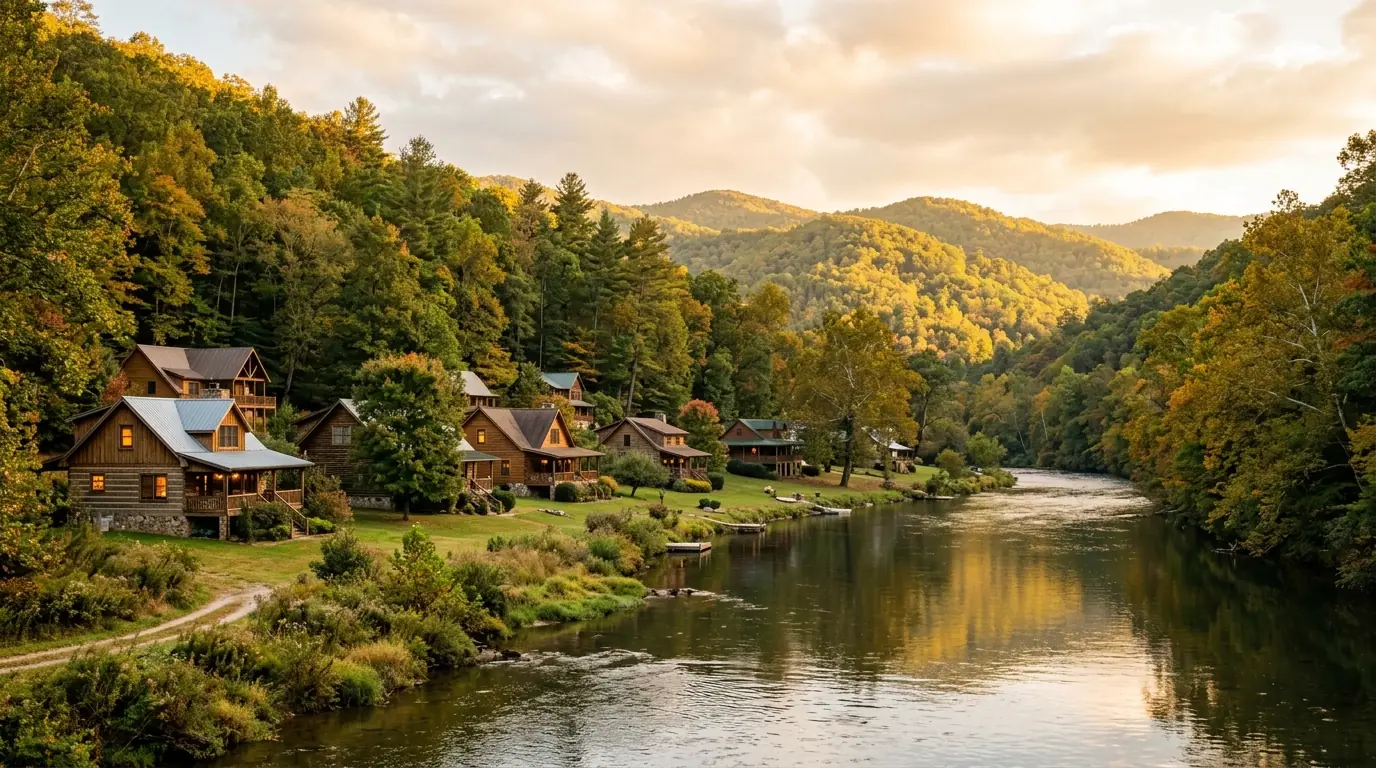
The river corridor in this area is characterized by mature hardwood forest, granite outcrops along the banks, and a mix of rural and semi-rural land configurations. Lots vary considerably. Some parcels have flat, usable river frontage. Others sit on sloped terrain where the house sits above the river with a path or stairs to the water’s edge. The difference in usability, and price, between those two scenarios is significant.
Property character varies by specific location. Parcels closer to Dahlonega tend to be on smaller lots with more developed road infrastructure. Properties further downstream, toward the Hall County line, can involve longer driveways, unpaved roads, and fewer neighboring homes. Both have appeal depending on what a buyer wants, but the practical implications of remoteness are worth understanding before making an offer.
Browse current Chestatee River waterfront home listings to get a sense of what’s available in this corridor today.
Understanding Flood Zones Along the Chestatee
Flood zone classification is one of the first things buyers should investigate on any riverfront parcel. The Federal Emergency Management Agency (FEMA) maintains flood insurance rate maps (FIRMs) that classify land relative to flood risk. Properties in a Special Flood Hazard Area (SFHA), typically Zone AE or Zone A, require federally backed flood insurance if the buyer is using a mortgage.
Not every Chestatee River parcel falls within the SFHA. The river’s flood plain varies by location, and some properties sit on elevated ground above the base flood elevation even if they’re close to the water. Others, particularly on flat lots near the river’s edge, may have portions of the lot or even the structure within a mapped flood zone.
Buyers can look up any parcel’s flood zone status at the FEMA Flood Map Service Center (msc.fema.gov) using the property address or parcel coordinates. This is free and takes only a few minutes. That said, the maps are not always current, and elevation certificates, prepared by a licensed surveyor, can sometimes demonstrate that a property is in a lower-risk zone than the FEMA map indicates, which can meaningfully reduce insurance premiums.
A local agent familiar with the Chestatee real estate overview can help buyers identify which parcels carry flood zone considerations before a formal offer is made.
Well, Septic, and Road Access on Riverfront Parcels
Most Chestatee River parcels near Dahlonega are not served by municipal water and sewer. Private well and septic systems are the standard. This is not unusual for rural North Georgia real estate, but it does mean buyers need to ask specific questions during due diligence.
For water: what is the well’s depth and flow rate? Has it been tested recently for contaminants, coliform bacteria, and other indicators? Older wells may have aging equipment or water quality concerns that require treatment systems.
For septic: where is the system located relative to the river? Georgia requires minimum setback distances between septic systems and waterways. On narrow lots, setback compliance can be a real constraint on where a system can be located or expanded. A septic inspection is essential, not optional, on any riverfront purchase.
Road access varies significantly. Some river properties have good gravel or paved road access. Others involve easement roads across neighboring parcels, or unmaintained private roads that become impassable in wet weather. Buyers should ask: who maintains the road? Is there a recorded easement? What happens in winter or during heavy rain? These are not hypothetical questions in North Georgia mountain terrain.
Understanding what buying a home near the Chestatee River in Georgia actually involves starts with these utility and access questions.
What Riverfront Living Actually Costs
The purchase price is only one component of waterfront property ownership. Ongoing costs deserve careful consideration before buyers commit to a riverfront home.
Flood insurance is a significant variable. For properties within a designated Special Flood Hazard Area, federally backed National Flood Insurance Program (NFIP) coverage is required by lenders. Premiums vary by coverage amount, the structure’s elevation relative to base flood elevation, and whether the home has a basement. Buyers should obtain actual flood insurance quotes, not estimates, before closing, because this cost can differ substantially from property to property even within a short stretch of river.
Maintenance on riverfront properties runs higher than comparable non-waterfront homes. Bank erosion is a reality on many parcels, and stabilization work, rock riprap, native plantings, retaining structures, can become necessary over time. Moisture management in and around the home is more demanding near a river. Outbuildings, docks, and water access infrastructure require regular upkeep.
Riverfront properties in this corridor have sold across a wide price range depending on lot size, river frontage, and home condition. Buyers should work with a local agent who can provide genuine comparable sales data rather than relying on automated estimates, which often fail to capture waterfront premiums or discounts associated with deferred maintenance.
The Achasta Connection: One Private Community Sits on the Chestatee
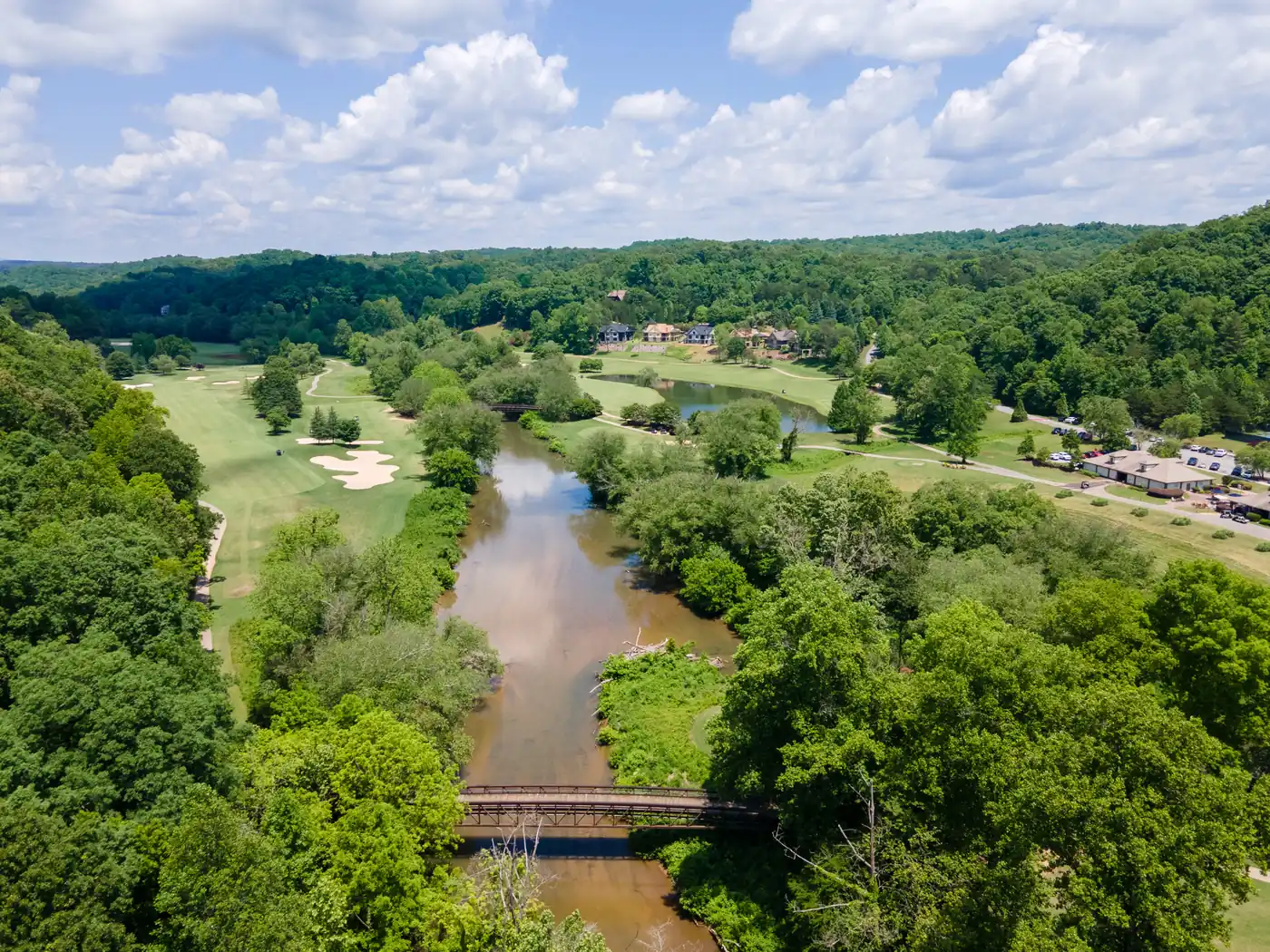
Achasta is a private residential golf community in Lumpkin County that sits along a stretch of the Chestatee River. The community is built around the Achasta Golf Club, an 18-hole Jack Nicklaus Signature Design course. Homes within Achasta include single-family residences, estate lots, and some townhome-style properties, most set within a gated, amenity-rich environment.
Buyers interested in Achasta should understand a few things specific to the community. First, Achasta is a homeowners association (HOA) community with dues and covenants. Second, and importantly for anyone considering investment use: Short-term-rental rights in Achasta are governed by the HOA covenants, and the current covenant language has not been verified — do not assume a home can be short-term rented, and request the current covenants in writing from the HOA. Whether homes may be listed on platforms like Airbnb or VRBO turns on that covenant language; buyers purchasing with any rental income intention should verify the current rules directly with the HOA before making an offer.
The Achasta setting along the Chestatee is among the more scenic in the county, and the community’s amenities are well-regarded. For buyers seeking riverfront property within a structured community environment, it is worth exploring. For buyers seeking privacy, no HOA involvement, or rental flexibility, the non-HOA river corridor parcels discussed in this guide are a better fit.
See a broader look at the top riverside communities near Dahlonega to compare options across the area.
Finding and Evaluating Chestatee River Homes
Riverfront property in the Chestatee corridor does not turn over frequently. Active inventory tends to be limited, and the best parcels, those with usable frontage plus good road access, can move quickly when they do appear. Buyers should be positioned to act with pre-approval in place and should have a clear picture of their requirements before beginning a serious search.
Online searches provide a starting point, but they frequently miss off-market properties and fail to accurately capture site-specific conditions. A listing described as “waterfront” may have only partial river access, an easement-dependent path to the water, or frontage that floods heavily in rainy seasons. These distinctions matter enormously to long-term satisfaction with the property.
Local representation is especially valuable in this market segment. An agent familiar with the Chestatee corridor knows which parcels have had prior issues, which access roads present seasonal problems, and which sellers might be open to a conversation before a home hits the public market. That local knowledge is not available from a national search portal.
Gold Peach Realty is the North Georgia brokerage that serves buyers and sellers in the Chestatee River corridor. Their agents know Lumpkin County riverfront property and can provide comparable sales, flood zone analysis, and property-specific guidance that makes a meaningful difference in this specialized market.
Frequently Asked Questions
What does it mean to own a waterfront home on the Chestatee River near Dahlonega?
It means owning property with direct or deeded access to a mountain river that flows through Lumpkin County. The experience is distinct from lake waterfront ownership, the river moves, seasonal water levels change, and the riparian setting requires different maintenance awareness. Ownership carries both aesthetic rewards and practical responsibilities around flood risk, erosion, and utility systems that buyers should understand before purchasing.
Are Chestatee River homes in a flood zone?
Some are, some are not. Flood zone designation depends on the specific parcel’s elevation and proximity to the river relative to FEMA’s mapped flood plain. Buyers should check the FEMA Flood Map Service Center for any property they are seriously considering and should ask for an elevation certificate if one exists. Properties within a Special Flood Hazard Area require flood insurance when financed with a federally backed mortgage.
Do riverfront properties near Dahlonega have public water and sewer?
Most do not. Private well and septic systems are the standard for rural river parcels in Lumpkin County. Buyers should request well test records and a septic inspection as part of standard due diligence. Some properties closer to Dahlonega’s town core may have access to municipal utilities, but this should be confirmed for each specific parcel rather than assumed.
What is the typical price range for homes on the Chestatee River?
Riverfront properties in this corridor have sold across a wide price range depending on lot size, amount of river frontage, home size and condition, and road access. There is no single typical price that applies uniformly. A local agent can pull genuine comparable sales specific to the submarket and help buyers understand what variables drive price differences in this segment.
Can I build a dock or structure on the Chestatee River?
Possibly, but it requires permitting through Georgia’s Environmental Protection Division and potentially the Army Corps of Engineers, depending on the location and type of structure. Not all riverfront parcels have banks suitable for dock construction. Easements or Army Corps setbacks may also apply in certain stretches. Buyers should not assume dock rights are inherent to riverfront ownership, this should be investigated during due diligence for any parcel where river access structures are a priority.
How close is the Chestatee River to downtown Dahlonega?
Several Chestatee River access points are an easy drive of Dahlonega’s historic square, with the drive lengthening the farther along the river corridor a property sits. The Achasta community is among the closer riverfront locations to town. Properties further downstream, toward the Hall County line, involve longer drives. The trade-off between proximity to town and depth of rural setting is one buyers should weigh based on their lifestyle preferences.
Is buying a home on the Chestatee River a good investment?
Riverfront property in North Georgia has shown durable demand from buyers seeking mountain lifestyle properties with water access. That said, investment outcomes depend heavily on the specific property, its condition, flood zone status, access, and carrying costs including flood insurance. No broad claim about appreciation or returns is reliable without examining the specific parcel. A local agent and careful analysis of comparable sales will give buyers a more honest picture than generalized market projections.
What community is located on the Chestatee River in Lumpkin County?
Achasta is the primary private residential community along the Chestatee River in Lumpkin County. It is a gated golf community built around the Achasta Golf Club, a Jack Nicklaus Signature Design course. Achasta offers a structured community environment with HOA governance and deed restrictions. Buyers interested in the community should contact a local agent for current inventory and HOA specifics.
Does Achasta Golf Community allow short-term rentals?
Whether Achasta homes may be short-term rented is a covenant question. Do not assume a home can be short-term rented, and request the current covenants in writing from the HOA before making an offer.
What should I ask a seller before buying a riverfront home in North Georgia?
Key questions include: Has the property flooded, and how many times in the past ten years? Is there a current elevation certificate? What is the source of water and how old is the well? When was the septic system last inspected and pumped? How is road access maintained and by whom? Are there any easements across the property or requiring access across neighboring land? Has the bank shown any erosion issues? These questions help surface the property-specific realities that standard disclosure forms do not always capture.
How do I find homes currently for sale near the Chestatee River?
The most reliable approach is working with a local agent who actively tracks inventory in the Chestatee corridor, including off-market opportunities that never appear in public listings. Online MLS searches provide a starting point but frequently miss site-specific detail that matters on riverfront property. Gold Peach Realty’s agents work this market and can identify active and upcoming listings that match a buyer’s requirements.
Why should I use a local real estate agent for a Chestatee River property?
Because the Chestatee corridor has property-specific nuances that generalist agents and online search tools do not capture reliably. Flood zone status, easement history, road access conditions, well and septic status, and prior flood events are all factors that require local familiarity to evaluate accurately. A North Georgia agent who knows the river knows the difference between a parcel with genuinely usable riverfront and one that looks attractive in photos but presents ongoing complications for its owners.
Ready to explore Chestatee River waterfront homes near Dahlonega? Explore Chestatee River, Dahlonega homes with Gold Peach Realty, North Georgia’s trusted local brokerage for the Chestatee corridor. Call (770) 283-1223 to speak with an agent who knows this market.